Why Does Manaslu Require a Special Permit?
The Manaslu Circuit is different from any other well established Nepali trekking route. A large section of the trek lies under the restricted area, particularly around the upper Manaslu region. Access is therefore controlled by the Government of Nepal rather than being treated like an ordinary hiking route.
For Trekkers this means two things:
-
You will need correct permits to enter the regulated sections of the trek
-
Independent trekking is not permitted in the restricted area. Foreign trekkers must arrange their restricted-area permit through an authorized trekking agency and trek with the required guide arrangement
This regulation might sound bit confusing at first when you start researching about Manaslu Circuit but is pretty straightforward when your trek is arranged through a registered agency.
Which Permits Do You Need for the Manaslu Circuit?
For a typical foreign trekker following the classic Manaslu Circuit route, the required permits and trekking documents include:
-
Manaslu Restricted Area Permit (RAP)
-
Manaslu Conservation Area Permit (MCAP)
-
Annapurna Conservation Area Permit (ACAP), only if your itinerary enters the Annapurna Conservation Area
-
TIMS Card, according to the current trekking registration requirements
The important thing to remember is that these permits serve different purposes. Your Manaslu RAP controls access to the restricted area, while MCAP and ACAP are conservation-area entry permits.
Let's take a look at each one of these permits individually
Manaslu Restricted Area Permit (RAP)
The Manaslu Restricted Area Permit is the permit that matters most when planning your Manaslu Circuit.
The restricted area covers Chumnubri Rural Municipality Wards 1, 2, 3 and 4 of Gorkha District, covering much of the remote Manaslu trekking region.
Unlike a normal conservation-area entry ticket, the RAP is calculated according to how long you spend inside the restricted area and the season in which you trek.
Manaslu RAP Cost for 2026
The current government-listed rates are:
|
Trekking Season
|
First 7 Days
|
Additional Days
|
|
September–November
|
USD 100
|
USD 15 per day
|
|
December–August
|
USD 75
|
USD 10 per day
|
These are the current rates published by the Nepal Tourism Board and Department of Immigration.
So, for example, if your itinerary keeps you inside the restricted area for 10 days during October, your RAP calculation would be:
USD 100 + (3 × USD 15) = USD 145 per person
During the December–August period, the same 10-day stay would be:
USD 75 + (3 × USD 10) = USD 105 per person
This is onereason we always recommend looking at the actual itinerary, rather than simply searching for a single "Manaslu permit price." Your total RAP cost depends on the number of days spent inside the restricted zone.
Manaslu Conservation Area Permit (MCAP)
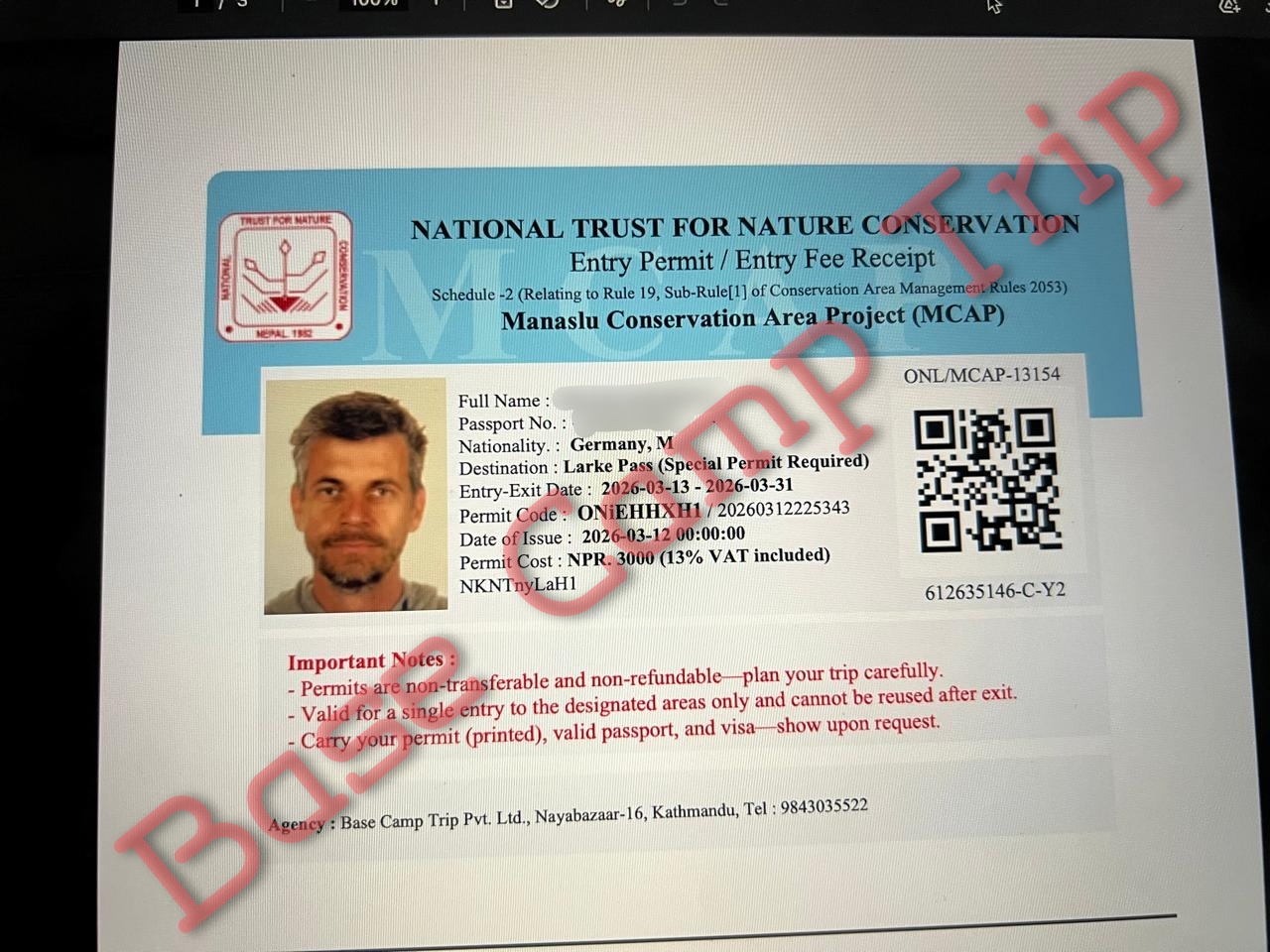
Once you're walking through the Manaslu region, you're not only traveling through a restricted area, you will also be entering the Manaslu Conservation Area.
The conservation area protects the region's extraordinary mountain environment, forests, wildlife and traditional Himalayan communities.
For foreign visitors, the current MCAP entry fee is NPR 3,000 per person per entry. The Nepal Tourism Board currently lists NPR 1,000 for SAARC nationals and NPR 100 for Nepali citizens.
The MCAP and RAP are not the same permit.
This distinction is important because travelers sometimes see "Manaslu permit" online and assume that one payment covers everything which is wrong.
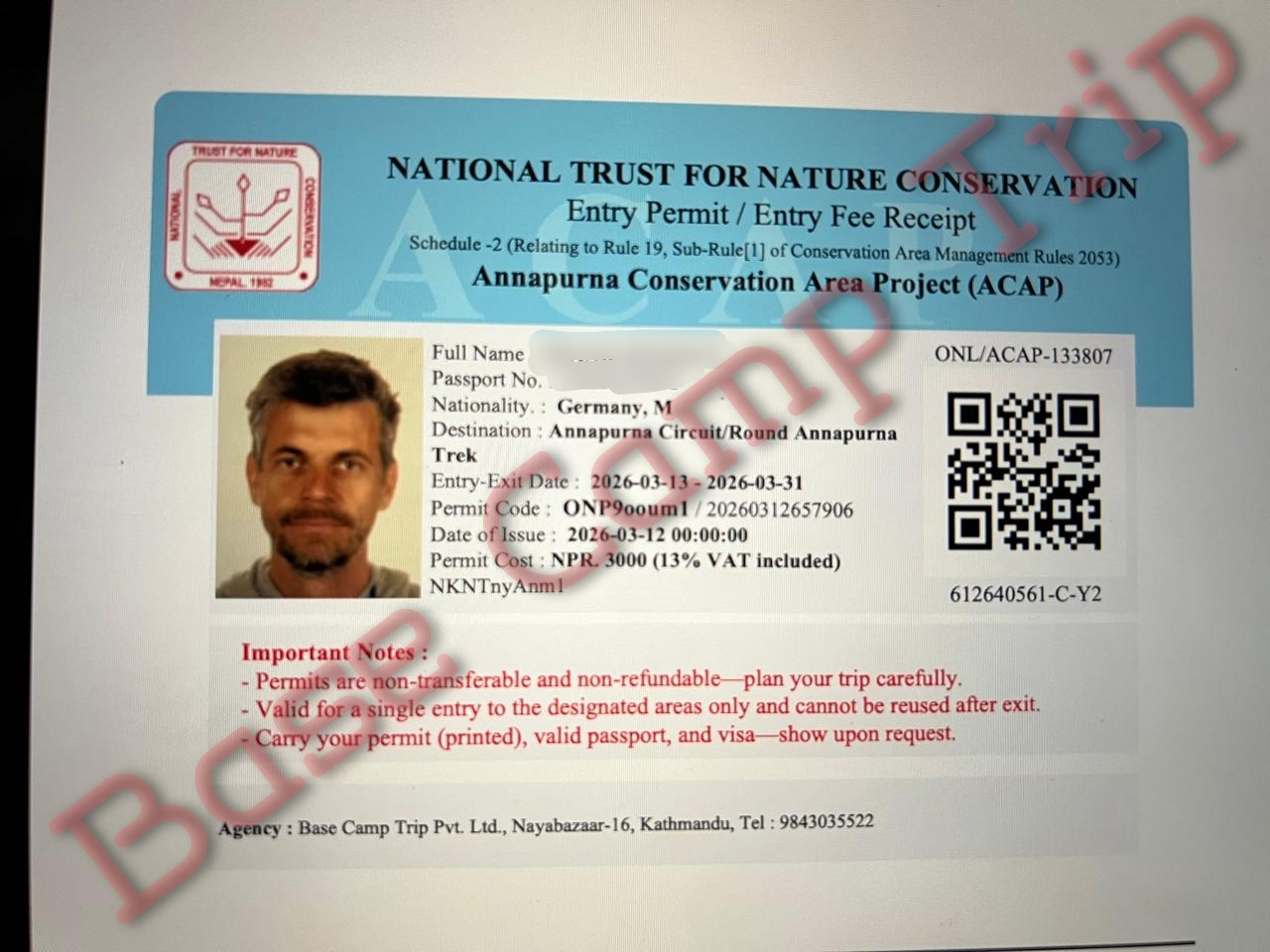
Annapurna Conservation Area Permit (ACAP)
This is another thing that often catches first-time Manaslu trekkers by surprise. You may be wondering “im doing Manaslu Circuit Trek, why do i need Annapurna Conservation Area Permit?”
The Manaslu Circuit does not necessarily end when you cross Larkya La Pass many itineraries continue toward Dharapani, entering the Annapurna Conservation Area on the way. If your itinerary enters the Annapurna Conservation Area, you will need an Annapurna Conservation Area Permit (ACAP) as well.
The current ACAP entry fee for foreign visitors is NPR 3,000 per person per entry, with separate rates listed for SAARC nationals and Nepali citizens.
So when planning your budget, don't look only at the Manaslu RAP. Check the complete route from your first trekking day to your final trailhead.
Is TIMS Required for the Manaslu Circuit?
The Trekkers' Information Management System (TIMS) is another document travelers should have the understanding of. TIMS is an official registration document which tracks hikers in Nepal to help authorities coordinate in emergency rescues and collect information.
The Nepal Tourism Board currently lists the Manaslu Circuit among the trekking routes covered by TIMS. The listed fee is NPR 2,000 for non-SAARC applicants and NPR 1,000 for SAARC applicants.
The trekking regulations can change time to time so we recommend confirming the latest TIMS requirements with your authorised trekking agency when booking your trek rather than relying on an old blog post or forum discussion.
Manaslu Circuit Permit Cost: Complete Breakdown
For a foreign trekker following a standard Manaslu Circuit itinerary, your main permit-related costs can look like this:
|
Permit / Document
|
Current Cost
|
|
Manaslu RAP, September–November
|
USD 100 for the first 7 days
|
|
Additional RAP days, September–November
|
USD 15/day
|
|
Manaslu RAP, December–August
|
USD 75 for the first 7 days
|
|
Additional RAP days, December–August
|
USD 10/day
|
|
MCAP
|
NPR 3,000
|
|
ACAP, when applicable
|
NPR 3,000
|
|
TIMS, non-SAARC
|
NPR 2,000
|
Your final permit cost depends on your nationality, trekking season, number of days inside the restricted area, and exact itinerary. Government fees can also be revised, so your trekking agency will likely ask you for the necessary information, regarding your nationality, trekking season and exact itinerary to calculate your total permit cost.
Can You Trek the Manaslu Circuit Without a Guide?
This is one of the most important questions we receive from independent travelers.
Foreign trekkers cannot independently trek through the Manaslu restricted area.
The Department of Immigration states that individual trekking permits are not issued for restricted areas and that permits are obtained through authorized trekking agencies.In other words, the classic "I'll arrive in Nepal and figure everything out once I'm there" approach is not suitable for the Manaslu Circuit.
Your trekking agency arranges the restricted-area permit, organizes the required guide arrangement, and ensures that your itinerary and documentation correspond with the route you are actually trekking and from a practical point of view, Manaslu is a route where having an experienced guide is valuable beyond the permit requirement. The trail becomes increasingly remote as you climb, weather can change quickly at altitude, and the crossing of Larkya La Pass at 5,106 meters demands proper preparation and acclimatization so having a experienced licensed guide is more of a safety necessity.
How Do You Get a Manaslu Trekking Permit?
The good news is that you do not need to spend your holiday running from one government office to another.For foreign trekkers, the permit process is generally handled by your authorized trekking agency.
Step 1: Finalize Your Itinerary
Your agency first establishes the route, trekking dates and number of days you will spend in the restricted area.
This is important because the RAP fee is linked to the duration of your stay in the restricted section.
Step 2: Submit Your Details
You will generally provide your passport information, trekking dates, itinerary and other required personal details to your agency.
Step 3: Permit Application
The trekking agency submits the necessary documentation to the relevant authority.
The Department of Immigration lists requirements associated with the trekking program, trekker details, passport information and authorized agency documentation.
Step 4: Begin Your Trek With the Correct Documents
Once the permits have been processed, your agency will make sure the necessary documentation is ready before you enter the restricted section to show at the permit checkpoints.
You should keep your passport and permit information accessible throughout the trek, as trekkers will encounter permit checks along the route.
What Documents Do You Need?
For most foreign trekkers, your agency will ask for information such as:
-
Valid passport
-
Passport details
-
Passport-size photograph where required
-
Trekking dates
-
Confirmed trekking itinerary
-
Personal information required for the permit application
-
Travel insurance information where applicable
The exact documentation can vary depending on the permit and your nationality, so your agency should confirm the requirements before processing your application.
How Long Does It Take to Get a Manaslu Permit?
The Department of Immigration's citizen charter lists same-day processing for trekking permit services when applications are submitted before 1 PM, subject to the required documentation and processing conditions.
Still, from an agency perspective, we recommend arranging everything before your trek rather than planning around same-day processing.
Your mountain journey should begin with your permits already organized—not with you wondering whether your paperwork will be ready.
What Is Not Included in the Permit Cost?
A common mistake trekkers often make when budgeting for Manaslu is assuming that the permit price represents the entire cost of trekking.
It doesn't.
Your overall Manaslu Circuit Trek cost will include:
-
Guide and porter services
-
Accommodation
-
Meals
-
Transportation
-
Domestic travel where applicable
-
Travel insurance
-
Equipment
-
Personal expenses
-
Tips
-
Additional accommodation before or after the trek
The permit is only one part of the total trekking budget.
Our Advice Before You Book a Manaslu Circuit Trek
If you have been researching Manaslu Circuit permit costs, you have probably noticed that different websites have quoted different permit prices. One might get confused after seeing so, but there is no need to be surprised.
Trekking regulations often change where government fees are updated from time to time, and many travel websites leave old information online for years without updating it.
Before paying for your trek, ask your agency for a clear breakdown of the permits included in your package, the number of days used for the restricted-area permit calculation, and whether ACAP and TIMS are included where applicable.
A reputable trekking agency should be able to explain your permit costs clearly rather than simply giving you one unexplained lump-sum figure.
If you have further any queries related to Manaslu Circuit Trek or any other Treks in Nepal feel free to reach out to us using the contact information given on the bottom.
Ready to Explore the Manaslu Circuit?
With the correct Manaslu Restricted Area Permit, conservation-area permits, trekking documentation, experienced guide and properly planned itinerary, you can leave the administrative details behind and concentrate on what brought you to Manaslu in the first place—the mountains, the culture, the wilderness and the feeling of walking somewhere genuinely magical and extraordinary.
Planning your Manaslu Circuit Trek for 2026/27? Get in touch with our experienced trekking team for the latest permit requirements, a carefully planned itinerary, and complete support from Kathmandu to the trail and back.